Delta Air Lines
Behind the Wings Mobile Web App
Designing resilience after a system-wide outage
Project type
Internal Tool · Mobile Web
Timeline
Fall 2024 (20 weeks)
Role
Innovation Design Intern
Reducing customer wait times during irregular operations
Following the CrowdStrike outage, Delta identified a critical gap: nearly all frontline customer service tools relied on the same backend infrastructure, meaning that when systems slowed or failed, employees and volunteers were left without functional tools.
I designed a lightweight mobile web app for Delta's Behind the Wings (BTW) volunteer program that connects directly to APIs, bypassing fragile layers of the system. The tool enabled volunteers to assist customers during outages, storms, and peak travel periods, contributing to an estimated 30% reduction in customer wait times.
Objective: Maintain operational capability and empower volunteers during disruptions.
End state: A resilient, mobile-first tool that works when core systems don't.
Volunteers lacked tools when systems failed
The CrowdStrike outage impacted all tools that depended on Delta’s primary infrastructure, including customer check-in, bag tracking, and standby management. Even when systems were technically online, they were often unusably slow.
This left:
Frontline employees unable to assist efficiently
BTW volunteers with no digital tools at all
The problem was twofold:
Operational fragility: A single point of failure made multiple tools unusable at once.
Limited volunteer capability: Even outside of outages, volunteers lacked access to the tools needed to meaningfully assist during disruptions like weather events.
Designing for failure, not best-case scenarios
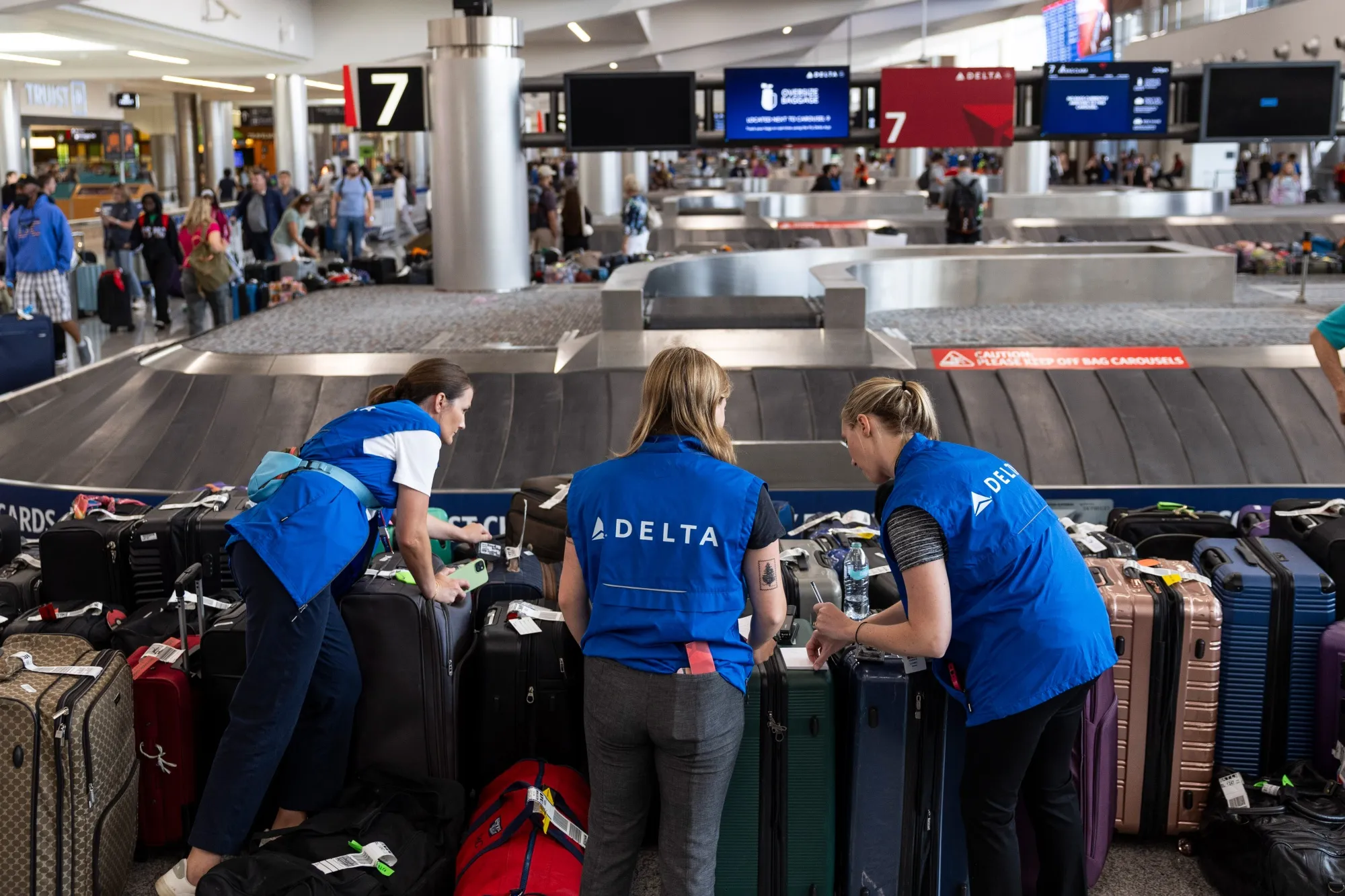
I volunteered alongside BTW teams during both normal operations and disruption events to understand where breakdowns occurred. I also partnered with engineering and BTW leadership to audit system dependencies and identify which workflows were most affected during outages.
Key decisions were guided by one question: What needs to keep working when everything else is slow or down?
This led to intentional tradeoffs:
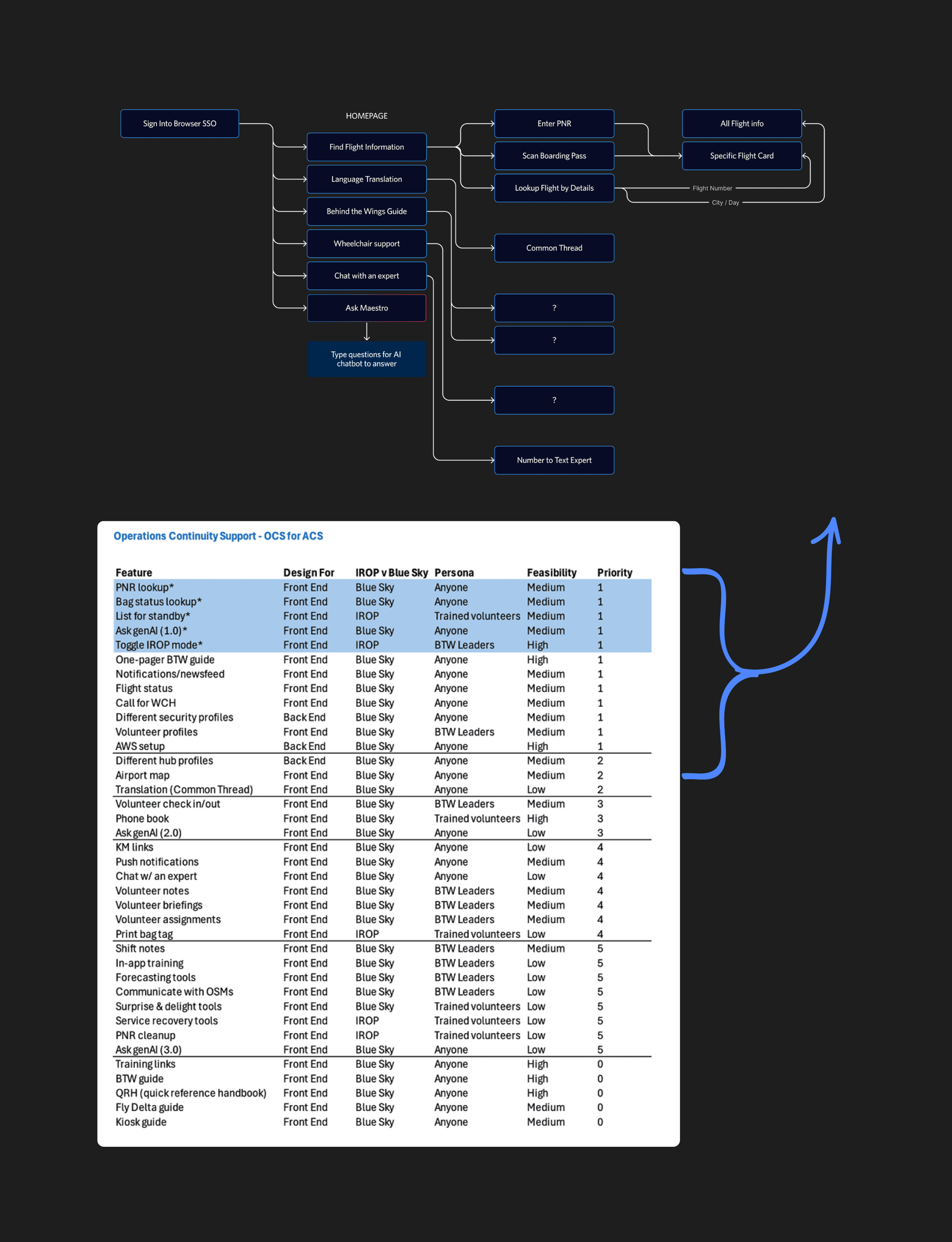
We did not rebuild existing frontline tools, because speed and reliability mattered more than parity
We did not expand scope, because simplicity was critical for infrequent volunteers
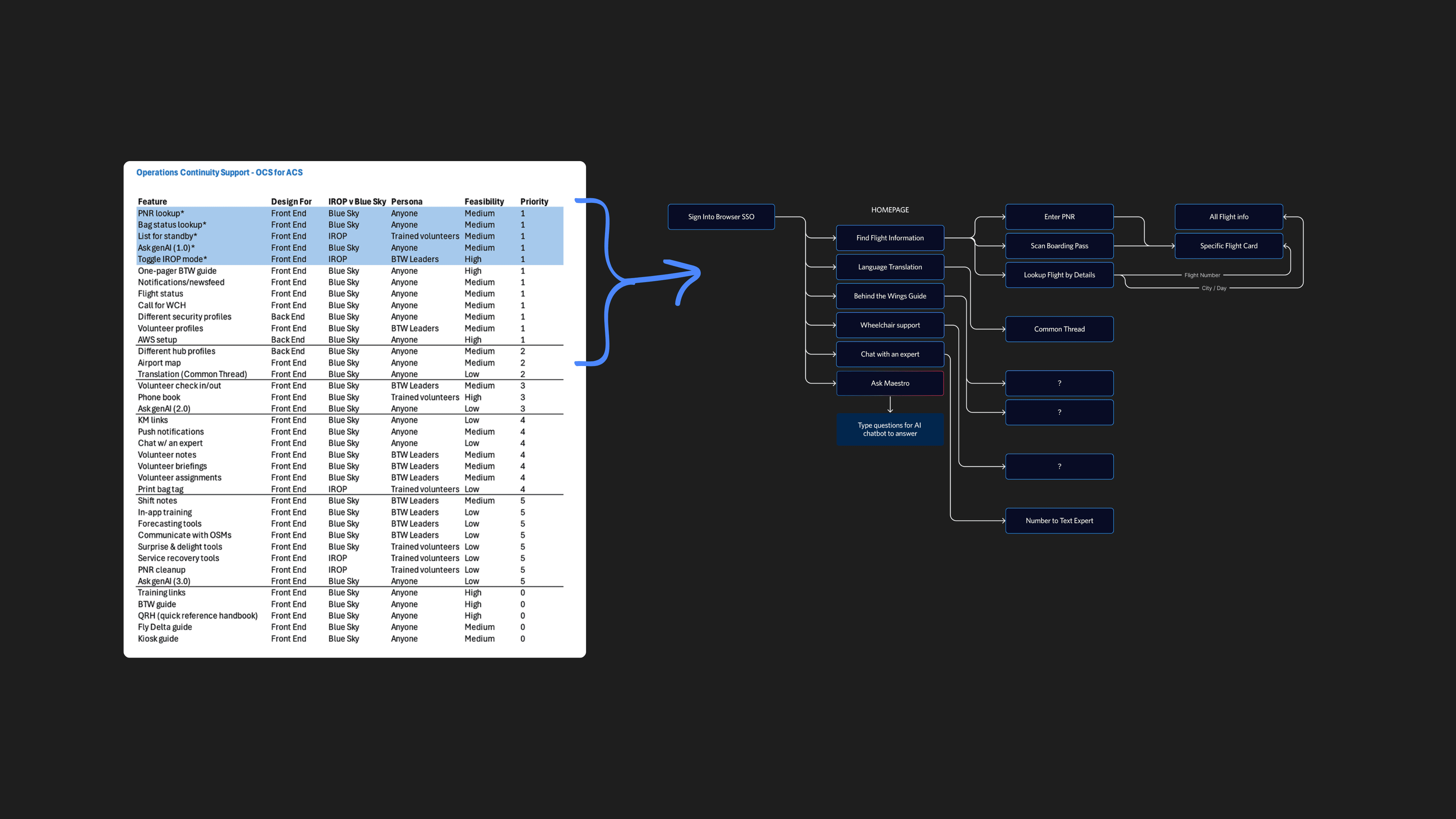
Instead, we focused on workflows that:
Directly reduced customer wait time
Could function independently of fragile systems
Were simple enough for infrequent volunteers to use confidently
A mobile web app that bypasses failure points
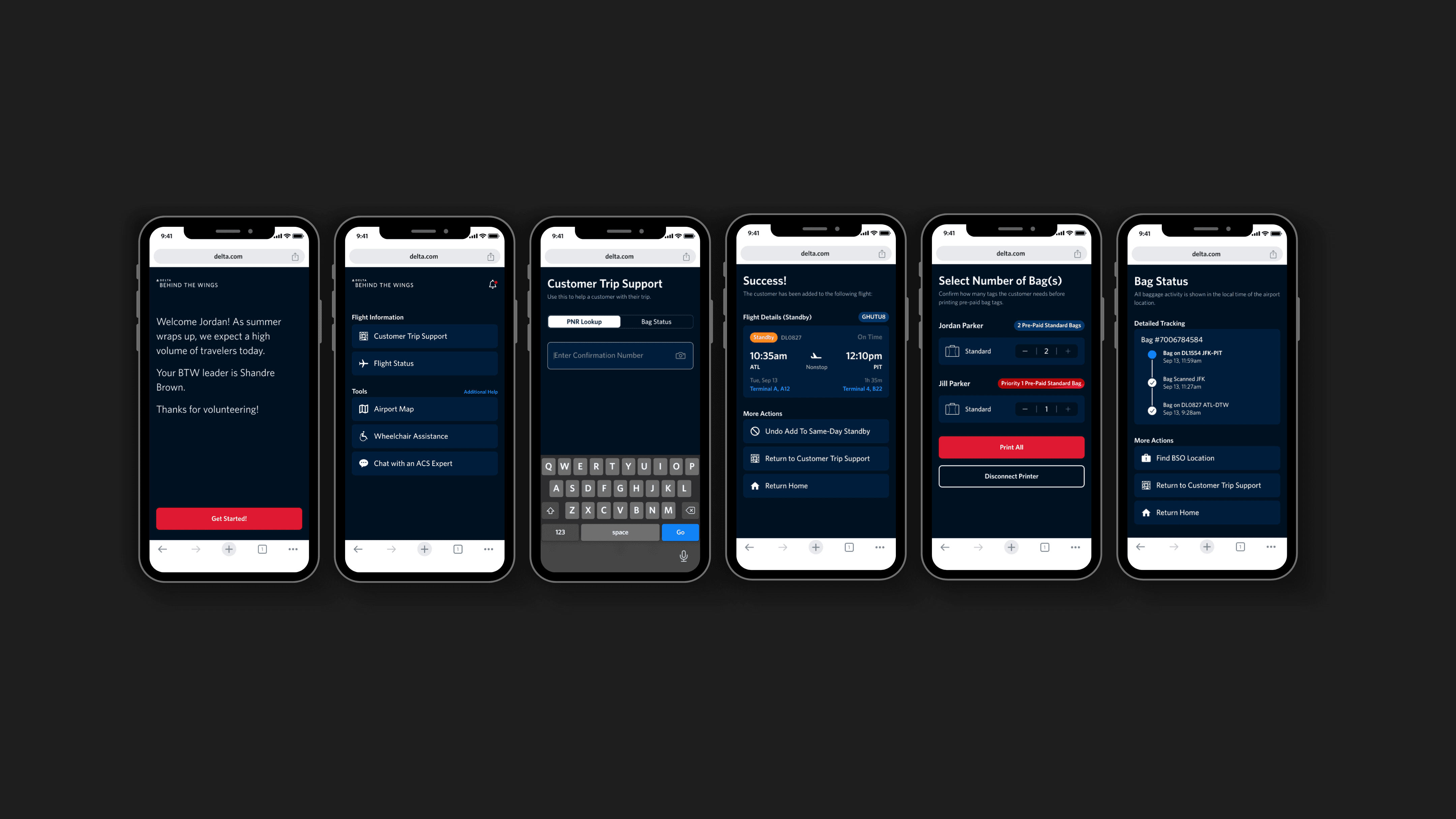
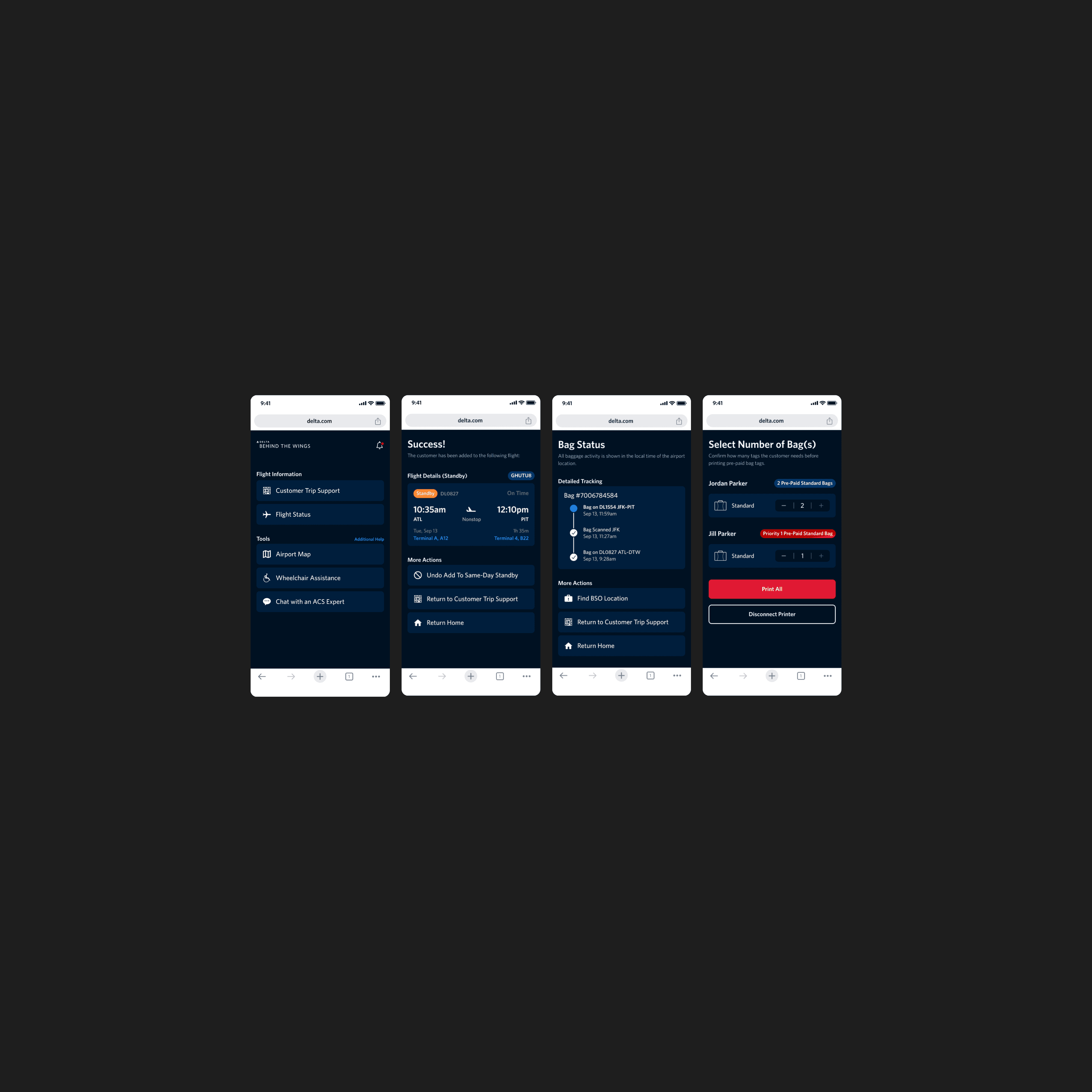
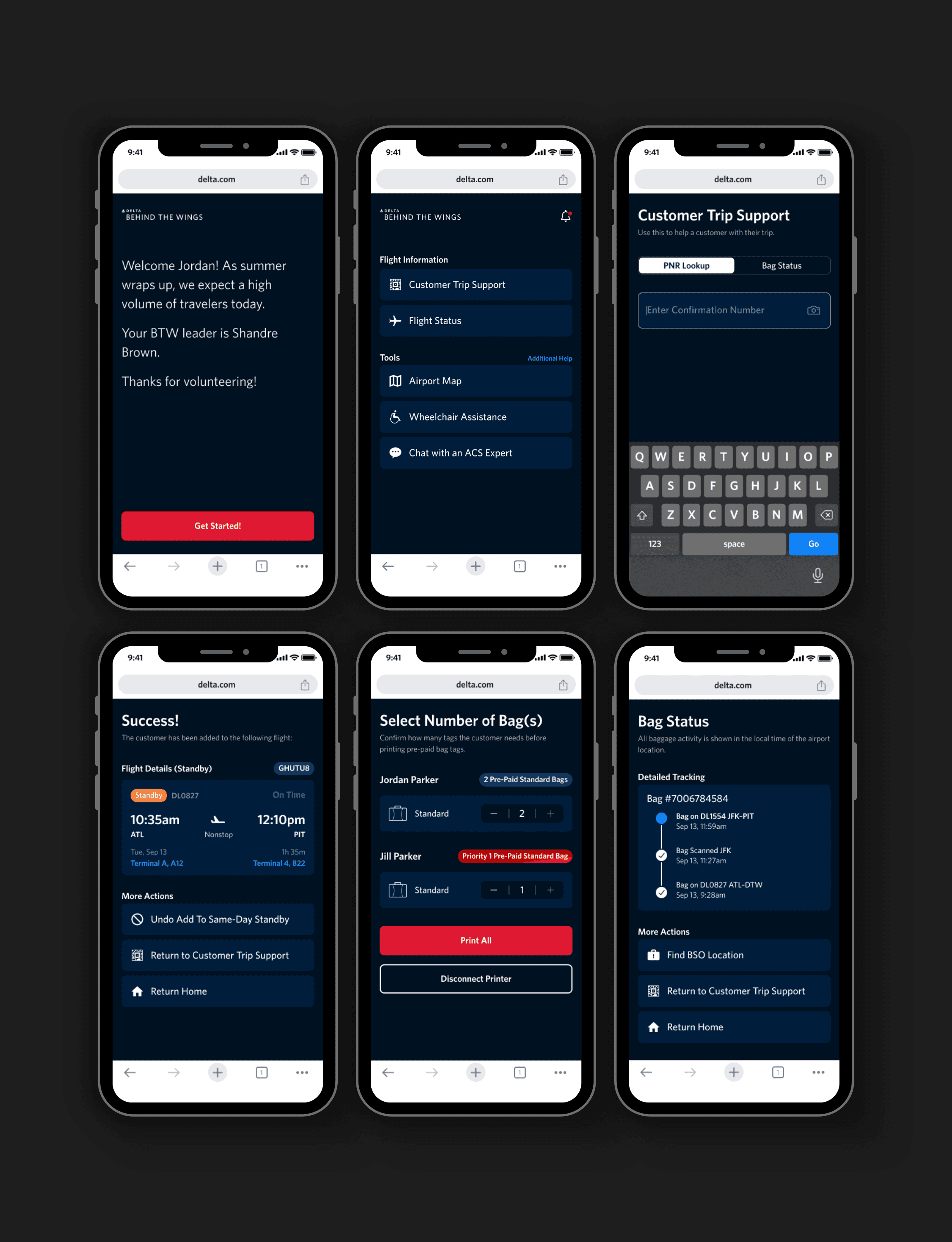
I designed a lightweight mobile web app that connected directly to APIs, bypassing system layers that had failed during the CrowdStrike outage.
The app enabled volunteers to:
Track bags via scan or input
Manage standby guests, helping them transfer to a different flight if their flight was impacted by an event
Coordinate wheelchair and mobility assistance
Print mobile bag tags
Design decisions focused on:
Minimal navigation and large tap targets for chaotic environments
Clear confirmation states to build volunteer confidence and ensure adherence to Delta guidelines
Reduced backend dependency to maintain performance during disruptions
By providing volunteers with tools similar to those of frontline employees, the app empowered them to be more helpful not only during outages but also during storms and peak travel periods.
Success was measured by:
Reduced customer wait times during disruptions (estimated ~30% reduction)
Increased volunteer effectiveness, enabling them to resolve more issues independently
Reduced strain on frontline staff, especially during peak events
Resilience is a design requirement
This project reinforced that resilience must be designed intentionally, not retrofitted. The most impactful decision was simplifying scope and bypassing fragile dependencies rather than adding features.
Measuring success through customer wait-time reduction, rather than feature adoption, helped ensure design decisions aligned with real operational outcomes.