Delta Air Lines
SkySizer
Helping travelers avoid unexpected gate-checks before they reach the airport
Project type
AR
Timeline
Fall 2024 (20 weeks)
Role
Innovation Design Intern
Helping travelers make informed carry-on decisions earlier
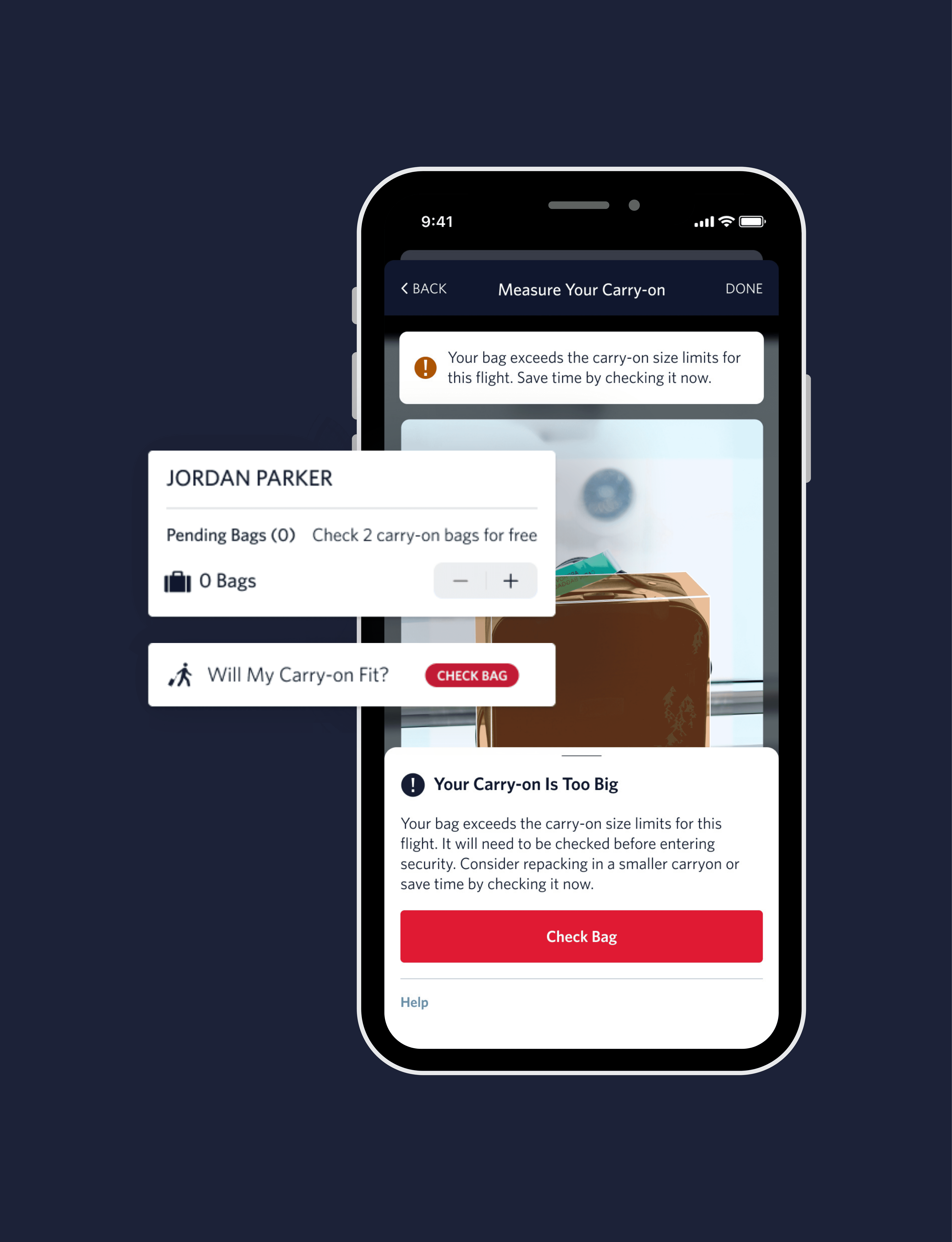
SkySizer is a consumer-facing feature concept for the Fly Delta app that helps travelers understand whether their carry-on is likely to be gate-checked before they arrive at the airport.
Unexpected gate-checking is a major source of frustration for travelers and a frequent cause of boarding delays. Today, these decisions happen at the gate, when options are limited, and stress is high. SkySizer shifts that moment earlier in the journey by giving travelers clearer signals and more control.
The experience combines AR-based bag measurement with flight-specific and historical data to estimate gate-check likelihood. Rather than enforcing rules, SkySizer focuses on transparency, helping travelers feel prepared and reducing last-minute surprises that impact both customers and operations.
Gate-checking happens too late in the journey
Many travelers intentionally bring carry-on bags to avoid checking luggage, only to be told at the gate that their bag must be checked. Even when overhead bins appear to have space, passengers often receive inconsistent messaging about capacity, which erodes trust and creates frustration.
From the airline’s perspective, oversized carry-ons and late gate-checks slow boarding, increase congestion in the aisle, and add pressure on gate agents during already time-sensitive moments. For travelers, the lack of early information means decisions are made for them, not with them.
The core issue is not a lack of policy, but a lack of visibility. Passengers currently have no reliable way to anticipate gate-check risk based on their specific flight, aircraft, or boarding group, which pushes friction to the most disruptive point in the experience.
Designing for early signals instead of perfect certainty
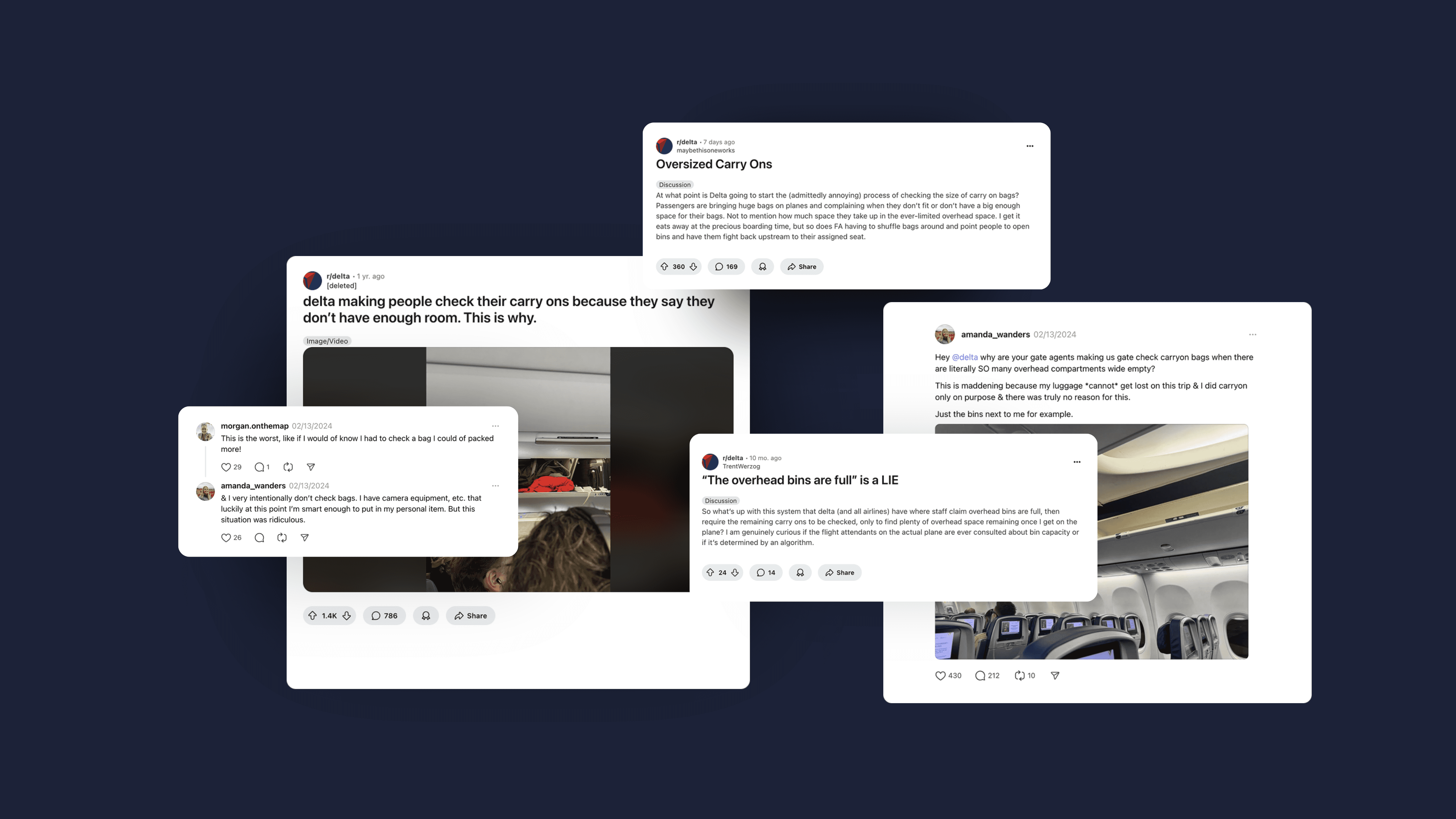
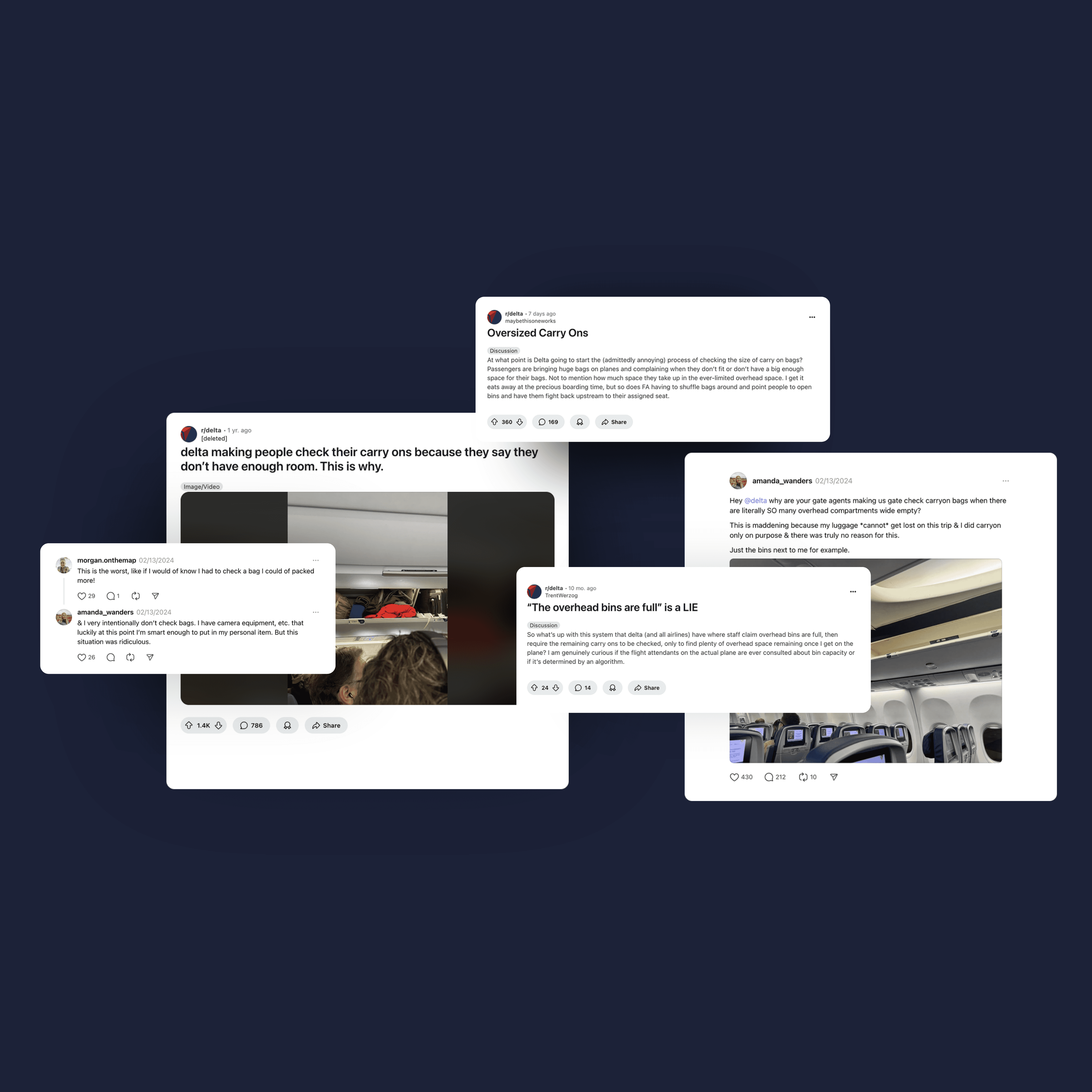
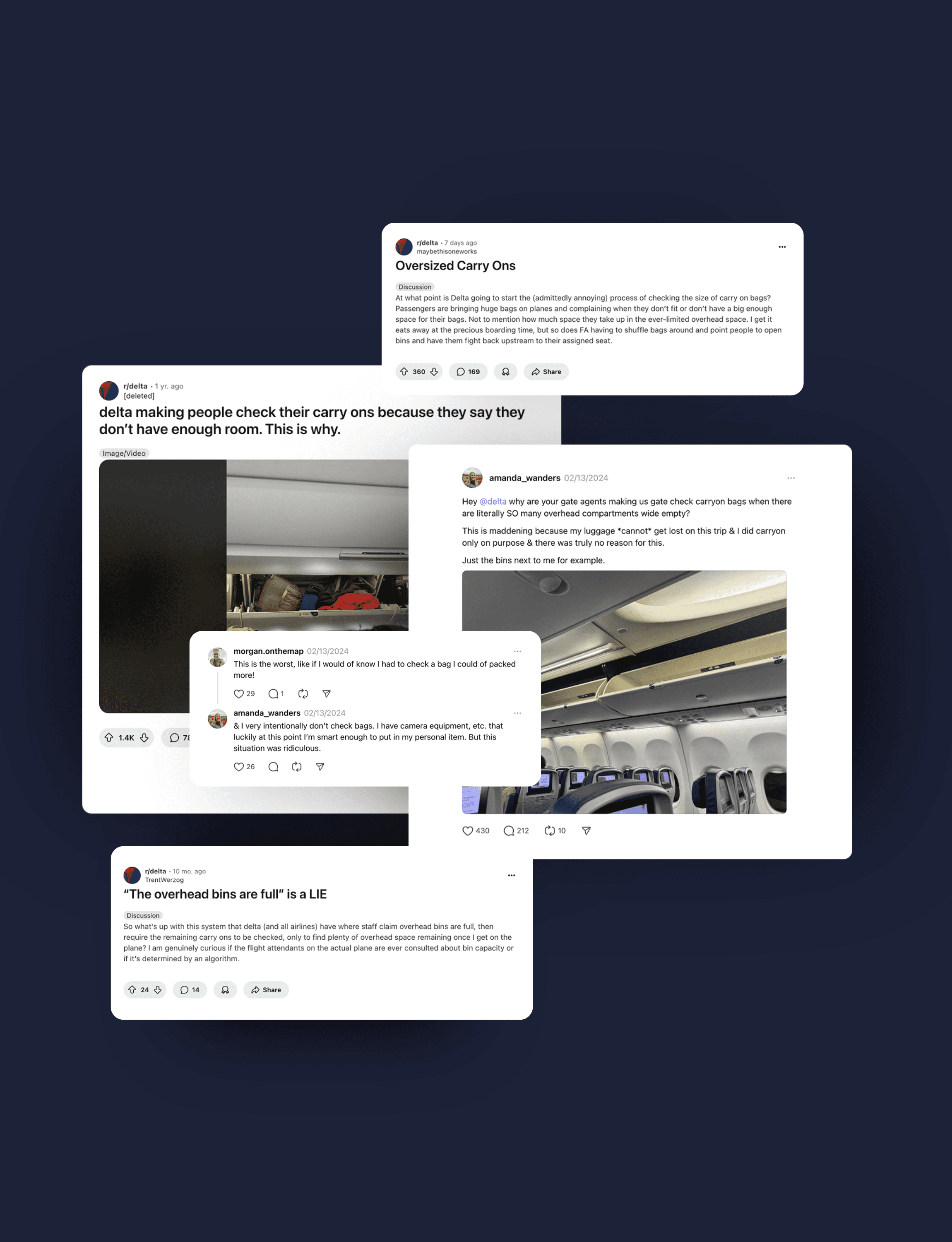
I began by reviewing public passenger feedback and complaints related to carry-on enforcement and boarding delays. Across forums and social posts, a consistent theme emerged: frustration stemmed less from bag size rules and more from uncertainty and surprise.
Instead of designing a tool for gate agents, I focused on where design could have the most impact for travelers: earlier in the journey, when choices are still flexible. This led to exploring how existing signals, such as aircraft type, boarding zone, and historical gate-check patterns, could be surfaced in a way that felt informative rather than punitive.
Key decisions included:
Designing the experience to set expectations, not guarantee outcomes. This meant, we did not design a hard “yes/no” checker, because overhead capacity is variable and certainty would be misleading. Instead, we treated predictions as probability-based guidance
Framing recommendations around traveler agency, not airline control. We did not design for agents because agent tools already exist and the core gap was traveler visibility. This pushed us to make the feature optional and lightweight within the Fly Delta app
These decisions helped keep the experience grounded, transparent, and framed around probabilistic guidance and traveler agency.
A predictive carry-on experience built into mobile check-in
SkySizer brings three ideas together in a single flow within the Fly Delta app:
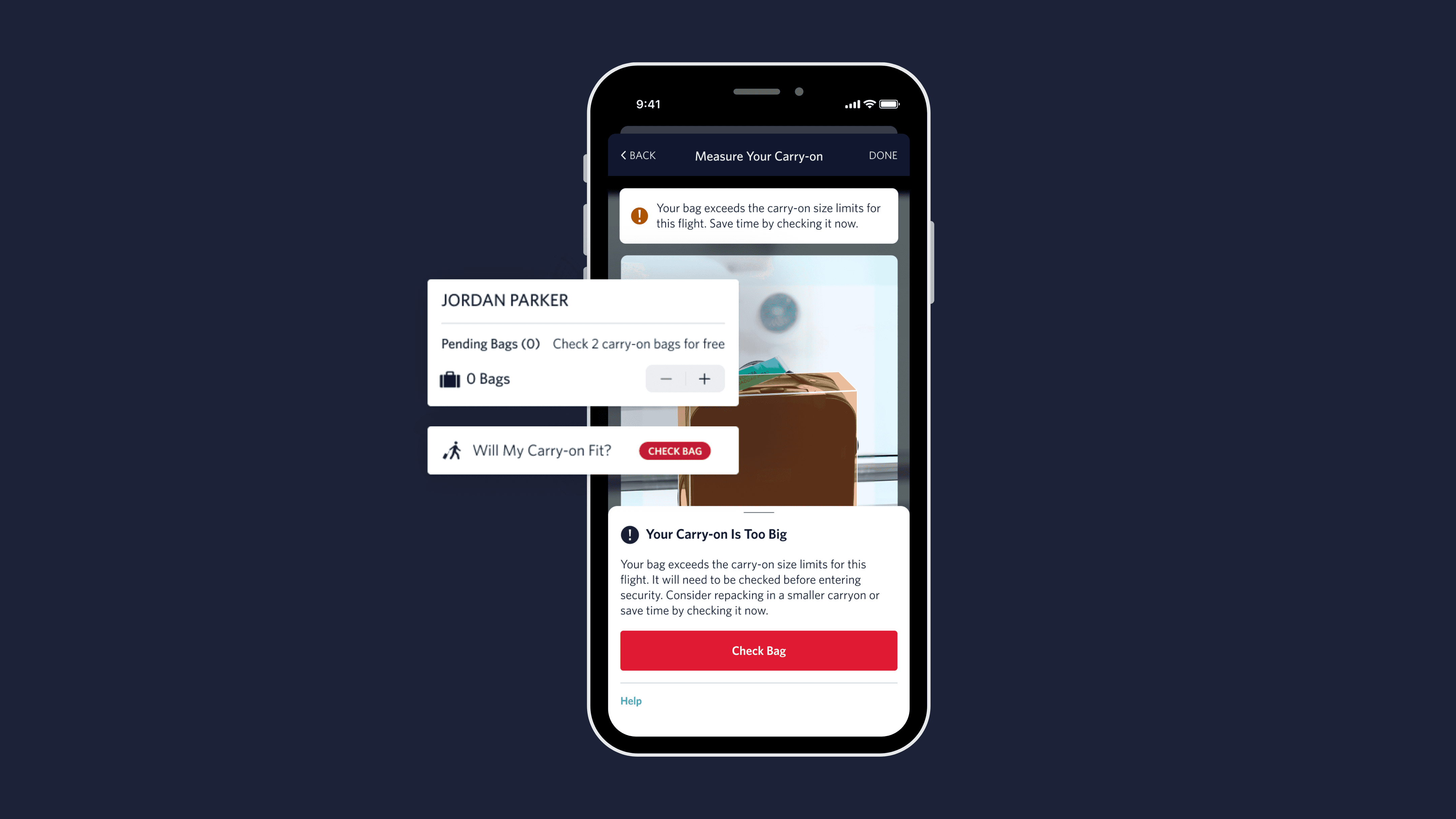
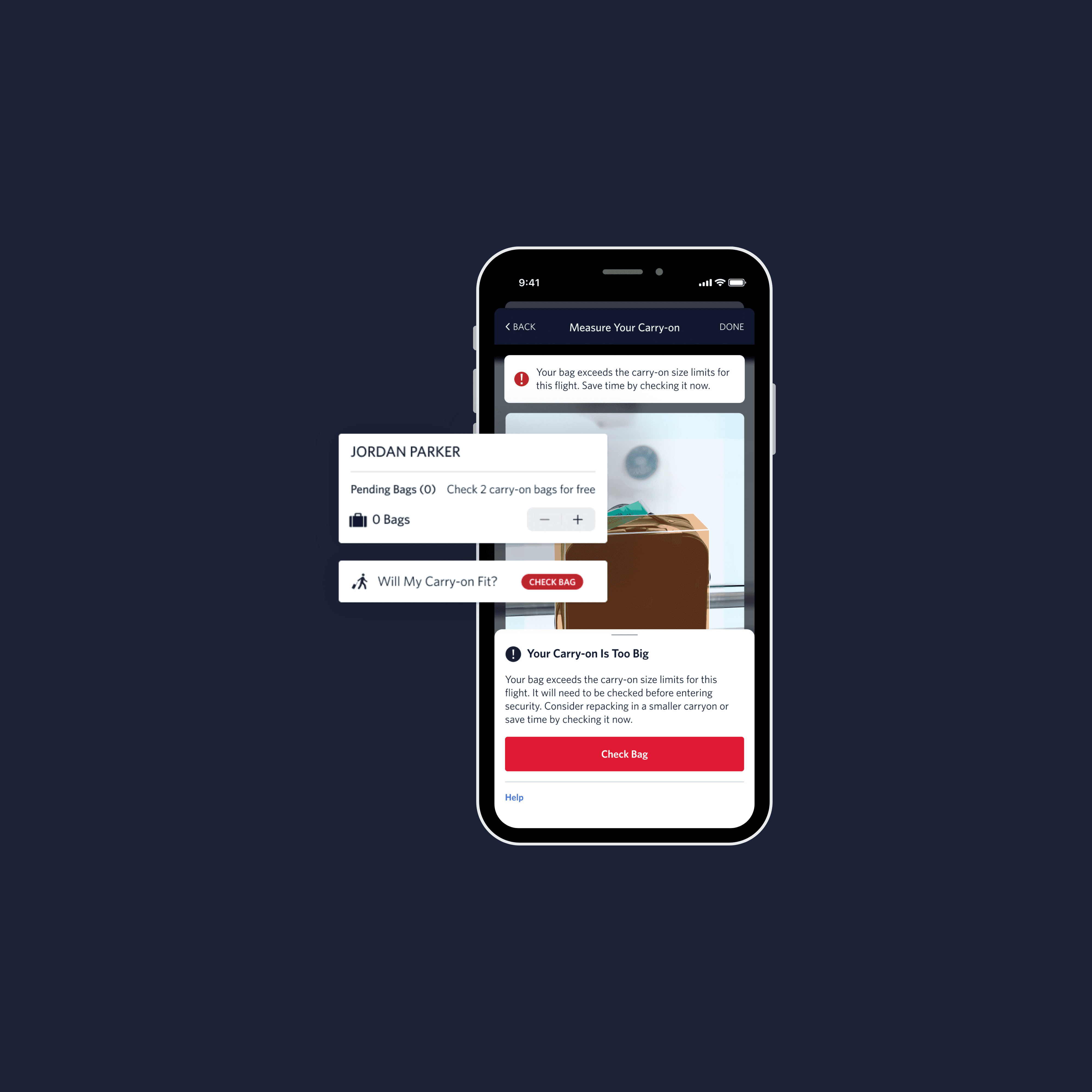
AR bag measurement using a phone camera to estimate carry-on size
Gate-check likelihood signals based on aircraft type, boarding group, and historical trends
Preemptive options that allow travelers to act earlier if risk is high
If the likelihood of a gate-check is elevated, the app presents options rather than instructions. Travelers can choose to check a bag earlier, adjust what they pack, or proceed knowing the risk ahead of time.
We intentionally:
Avoided guarantees, because accuracy matters less than setting expectations
Kept the feature optional, so it supports rather than interrupts check-in
Framed recommendations around choice, not airline control
By shifting these decisions earlier, SkySizer has the potential to reduce last-minute gate congestion, improve boarding flow, and increase traveler trust through clearer expectations
We defined clear signals to measure impact if shipped:
Fewer last-minute gate-checks on flights with high carry-on volume
Earlier bag-check decisions during mobile check-in
Reduced boarding delays tied to overhead bin congestion
Improved traveler sentiment around fairness and transparency
These metrics helped ground the concept in operational and customer outcomes, not just interface improvements.
Designing and prototyping AR experiences
This project was my first time designing an AR-based experience and thinking through how camera-based interactions translate into something intuitive and useful. I learned how small design decisions, like calibration cues, framing guidance, and feedback states, can make or break trust in an AR measurement tool.
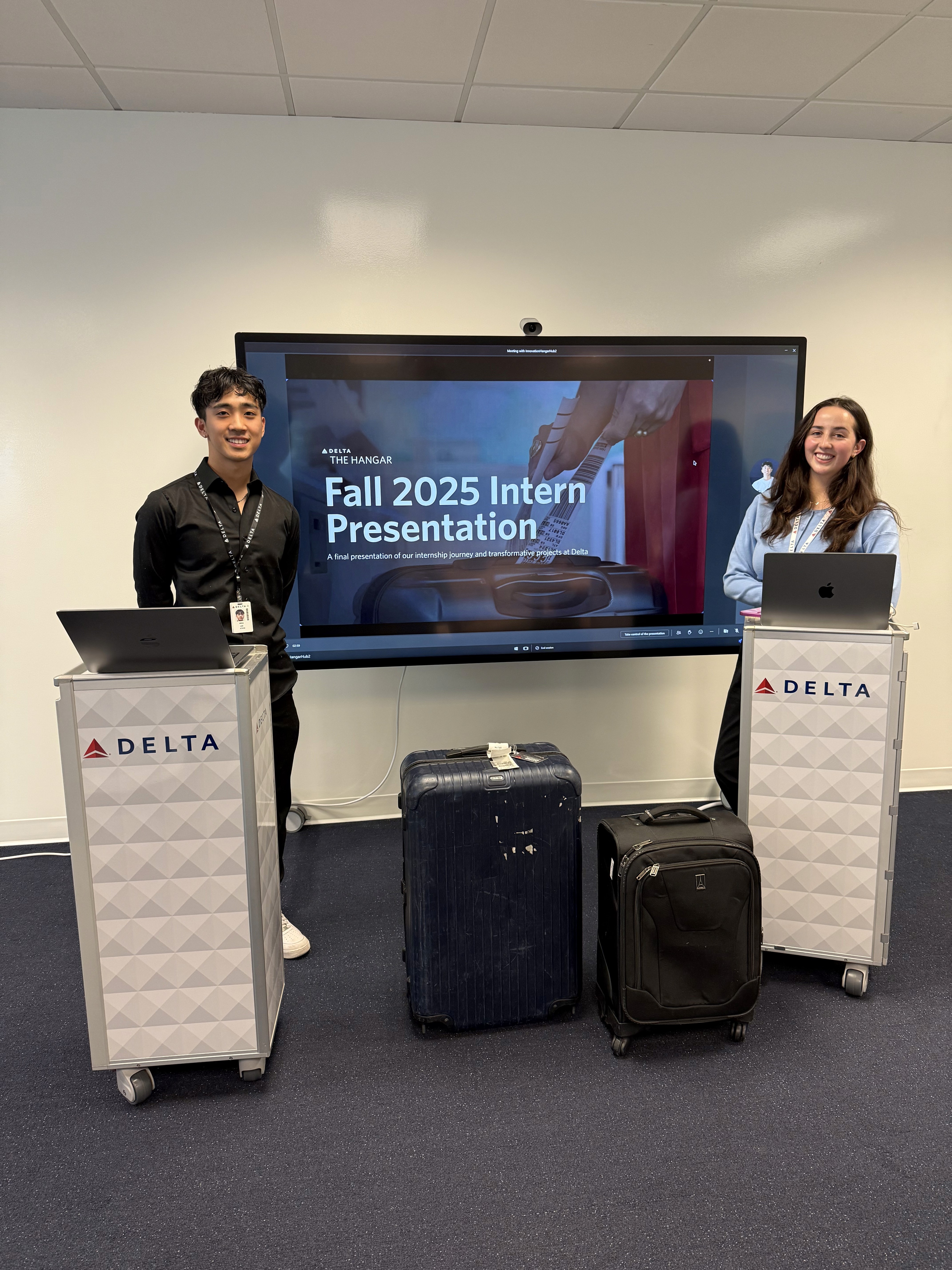
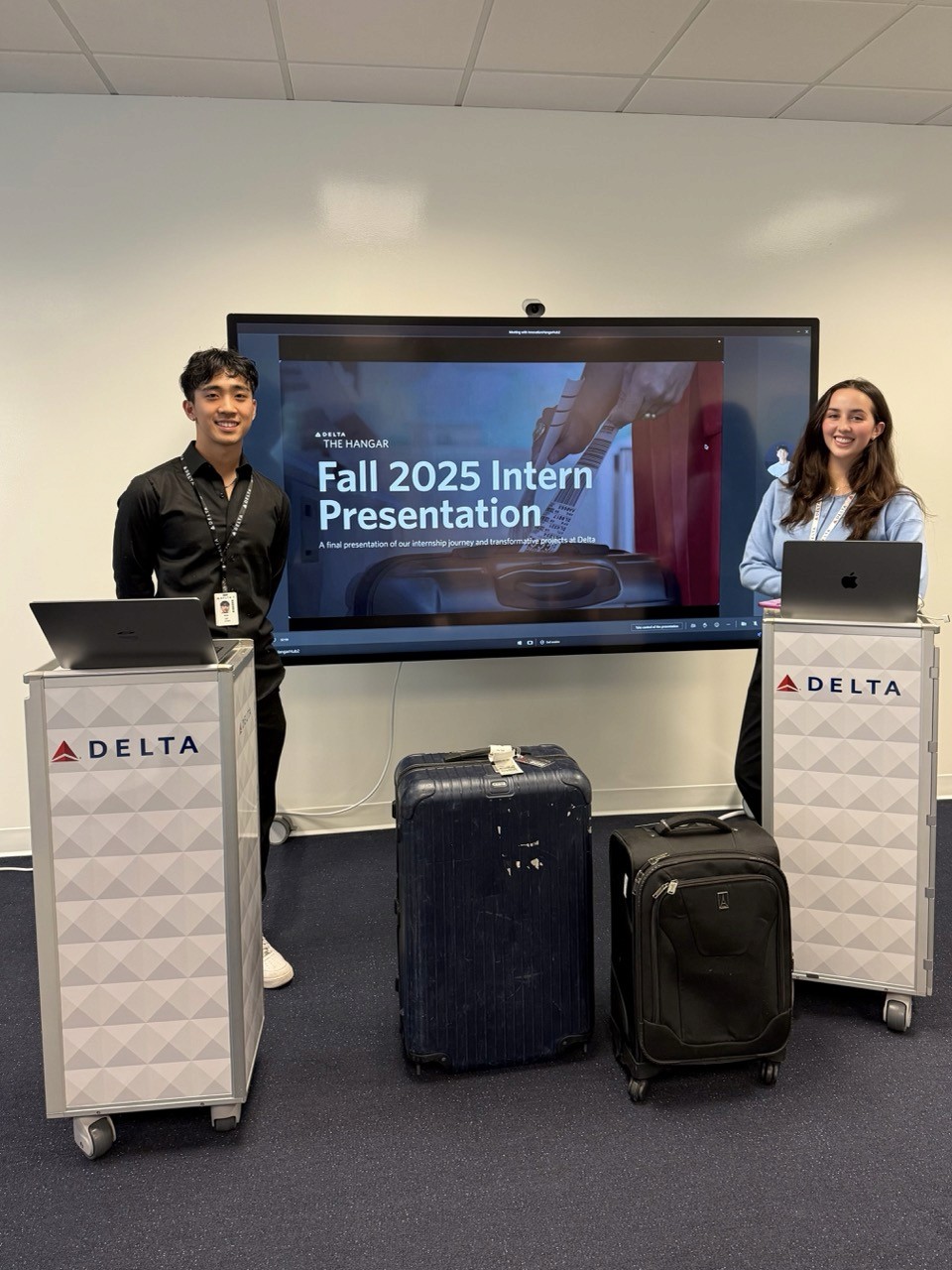
I also worked with an engineer intern to build a functional prototype that we could test with real suitcases in the office. Having a working prototype allowed us to pressure-test assumptions, understand technical constraints early, and ground the design in what was actually feasible. Being able to demonstrate the experience live during our final presentation helped me better understand how design and engineering come together when exploring new interaction models.